
The question I get asked most often is not “how much does it cost?” or “how long will it take?”
It is this: “How do you write in someone else’s voice?”
It is a fair question. And the honest answer is more instinctive than most people expect.
The Misconception
Most people imagine a ghostwriter sitting alone at a desk, typing away at someone else’s ideas like a human typewriter. You feed in the content, the ghostwriter feeds out the words. Clean, mechanical, efficient.
That is not how it works. Not even close.
A ghostwriter is not a typist. A ghostwriter is a listener.
What I Actually Do in the First Few Weeks
When I begin working with a new author, I don’t start writing immediately. I start observing.
I listen to how they speak. The pace of their sentences. Whether they think in long, flowing thoughts or short, sharp bursts. Whether they build to a point slowly or land it in the first line. Whether they use humour, or stay serious. Whether they speak the way they write, or whether there’s a gap between the two that needs bridging.
Thirty years of journalism taught me to read people quickly — to walk into an interview and understand within minutes how someone’s mind works, what they care about, and how they naturally express themselves. That skill, more than any other, is what makes ghostwriting possible.
By the time I write the first chapter, I am not writing as myself. I have stepped aside entirely. The voice on the page belongs to the author — I am simply the one holding the pen.
Two Books. Two Completely Different Voices.
Let me give you a concrete example.
Purvi Gandhi’s book, Coffee, Cafés & Conversations, is warm, conversational, and brimming with enthusiasm. It reads like a knowledgeable friend telling you about her favourite subject over a long, unhurried cup of coffee. The sentences breathe. There is delight in every paragraph.
Dr. Bhaskar Das’s book, You Inc., is precise, authoritative, and structured. It reads like a seasoned leader distilling decades of hard-won wisdom — every sentence purposeful, every idea building on the last. Dr. Das was President of The Times of India. That clarity and command had to come through on every page.
Same ghostwriter. Completely different books. That is the job.
The Process, Simply Put
If you have never worked with a ghostwriter before, here is what the collaboration typically looks like:
Discovery conversations — We talk. At length. About your idea, your audience, your reasons for writing this book, and the stories and experiences you want to share. These conversations are the raw material of the book.
Structure first — Before a single chapter is written, we build a blueprint. A chapter-by-chapter outline that gives the book its spine. A book without structure is a conversation without a point.
Drafting in your voice — I write. You read. You tell me what sounds right and what doesn’t. The manuscript evolves through conversation, not guesswork.
Editing and refinement — Each draft is refined until it sounds unmistakably like you — on your best day, at your most articulate, saying exactly what you have always meant to say.
The Question of Credit
Ghostwriting has existed for centuries. Politicians, CEOs, celebrities, and thought leaders have always worked with writers to shape their ideas into books. It is not a secret, and it is not something to be uncomfortable about.
Your ideas are yours. Your experiences are yours. Your expertise is yours. A ghostwriter’s job is to make sure the world can access all of that — clearly, compellingly, and in a voice that is recognisably you.
The byline belongs to the author. Always.
So — Do You Need a Ghostwriter?
If you have a book idea but don’t know where to start — you might.
If you have started and stopped three times because the writing feels like wading through mud — you might.
If you know exactly what you want to say but can’t seem to get it onto the page the way it sounds in your head — you almost certainly do.
The right ghostwriter doesn’t take over your book. They give it back to you — finished, polished, and ready for the world.
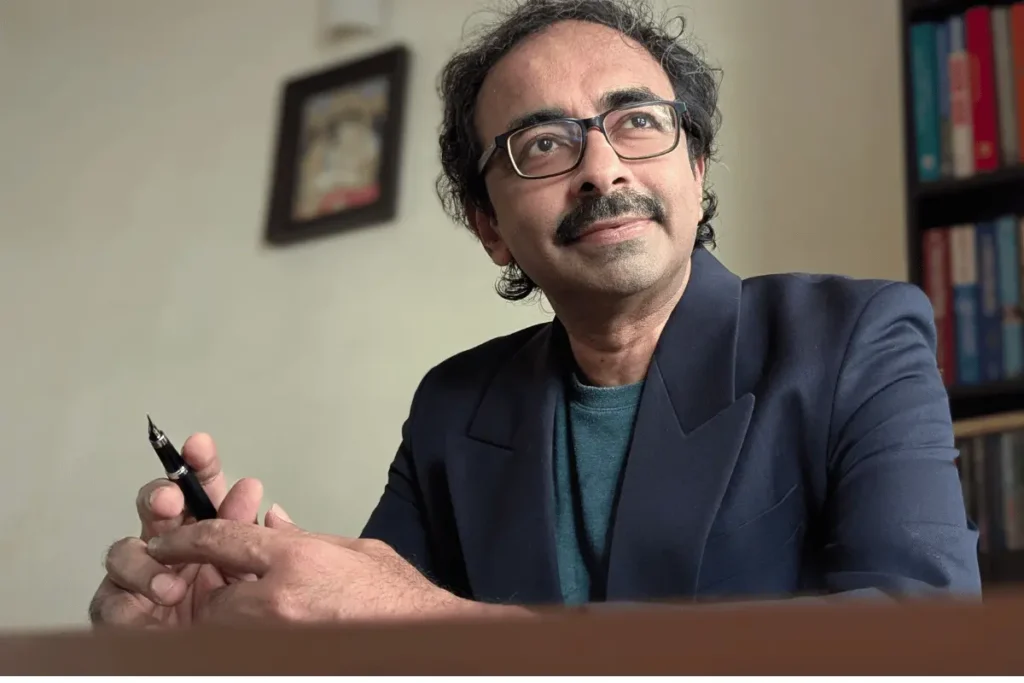
I am R Sridhar — an executive ghostwriter in India with over 30 years at The Times of India, where I edited some of the group’s most respected publications — Times Ascent (careers and HR), Strategic Marketing and General Management Review in association with IIM Calcutta (management and business), Times Wellness (self-help and productivity), and Downtown Plus and Times of South Mumbai (memoir and narrative non-fiction). I have also worked as Research Editor on an academic publication with Columbia Business School, New York, and contributed to six published books as author, ghostwriter, book coach, research editor, and editor.
If you have been wondering whether ghostwriting is right for you, I would love to have that first conversation.