
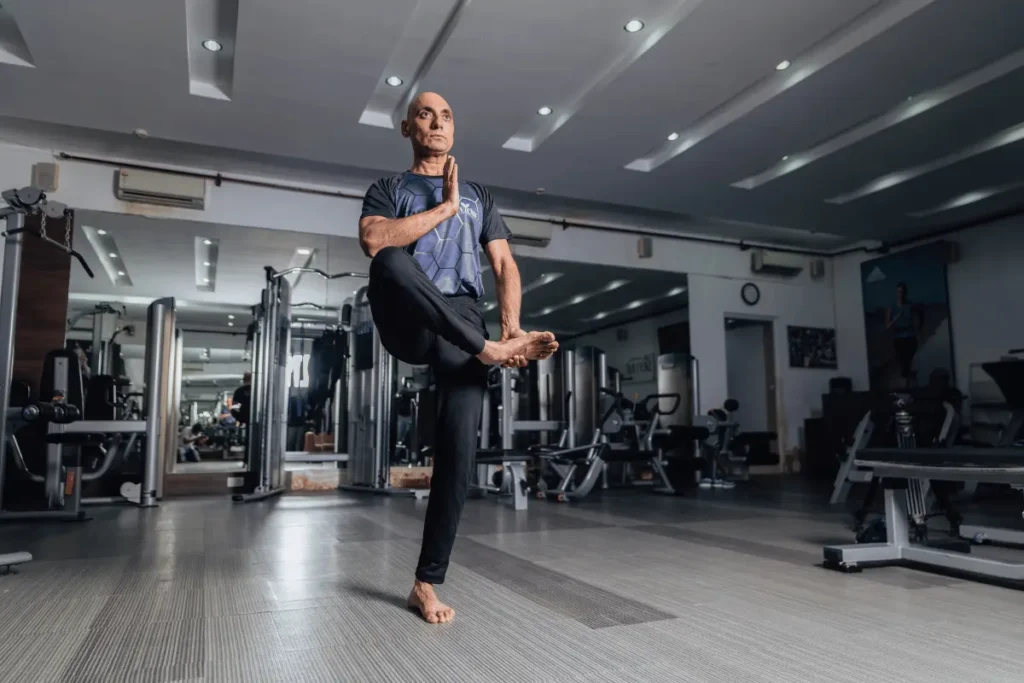
Some stories stop you in your tracks. This is one of them.
The Referral That Changed Everything
Ashishwang Godha is an author whose book I had edited. She knew Shiraz Siddiqui, knew his extraordinary story, and felt that if anyone could do justice to it, I could. It is the kind of referral that means something — not a cold introduction, but a vote of confidence from someone who had seen the work firsthand.
Shiraz wanted his story edited into a book — the story of a man who had been battling Acute Lymphoblastic Leukaemia for nearly two decades and had refused, at every turn, to let it win.
We never met in person. Shiraz was careful about outside contact — his immune system, after years of treatment, chemotherapy, bone marrow transplants, and multiple relapses, couldn’t afford the risk. Everything happened over the phone. Conversations, feedback, revisions — all of it conducted between two people who never sat in the same room.
In some ways, that made the work harder. In other ways, it made me listen more carefully.
A Life That Defied Every Prognosis
To understand the book, you need to understand the man.
In 2004, at 27 years old, Shiraz Siddiqui was a fitness instructor at JW Marriott Mumbai — a nutritionist, marathon runner, and martial arts practitioner who had never taken a paracetamol in his life. He was at the peak of his physical powers, coaching high-net-worth clients, building a career, dreaming of a future.
Then came the diagnosis. Acute Lymphoblastic Leukaemia — a form of blood cancer that typically gives its patients five years, if they’re lucky.
Nineteen years later, Shiraz was still fighting.
Not just surviving — fighting. He achieved two remissions. He underwent a bone marrow transplant so complex that his blood’s RH factor changed three times, leaving him living with three distinct blood groups. He built Virtus Wellness, a premium fitness company serving Mumbai’s most discerning clientele, employing over thirty people. He ran marathons. He coached champions.
Among his clients was Vedaant Madhavan — son of actor R Madhavan — whom Shiraz guided with personalised nutrition plans as Vedaant rose to become one of India’s most promising competitive swimmers. Sarita Madhavan, who wrote the foreword to the book, described Shiraz as “a living embodiment of strength and resilience” and “an exceptional role model.”
This was the man whose story I was entrusted to shape.
The Book — and the Race Against Time
Of Cancer and Marathons is exactly what it sounds like — a memoir of two parallel journeys. The physical battle against a disease that kept returning. And the athletic journey that gave Shiraz a reason to keep going, a way to prove to himself and to the world that cancer did not define him.
The writing was Shiraz’s own — raw, honest, and possessed of a voice that needed editing and shaping rather than replacement. My job was to bring structure and clarity to a story that was already vivid and powerful. To make sure the reader could feel what Shiraz felt without ever losing the thread of his extraordinary life.
We finished the book.
A month later, Shiraz relapsed.
He passed away before Of Cancer and Marathons could be launched.
Nida
His wife, Nida Siddiqui, had run marathons alongside him. She had been there through every treatment, every relapse, every recovery. When Shiraz passed, she did something that speaks to the kind of partnership theirs was — she sat down and wrote the final chapter herself.
Posthumously. In his memory. For the readers he had wanted to reach.
There was no launch event — a prayer ceremony instead, quiet and intimate, as befitting the moment.
But the book exists. Of Cancer and Marathons is out in the world, carrying Shiraz’s voice, his philosophy, his defiant, magnificent refusal to be defined by illness.
That matters.
What Shiraz’s Story Means for Anyone With a Book Inside Them
I think about Shiraz when people tell me they’ll write their book “when things settle down.” When the timing is better. When life is less busy, less complicated, less uncertain.
Shiraz didn’t have that luxury — and he wrote his book anyway. From a place of genuine physical vulnerability, with an immune system that couldn’t risk a visitor, over the phone, one conversation at a time.
If you have a story worth telling — a life worth documenting, an expertise worth preserving — the time is now. Not because life is short in some abstract motivational-poster sense. But because the ideas in your head, the experiences in your memory, the wisdom you have accumulated — these belong to more people than just you.
Shiraz knew that. He wrote his book anyway.
I am R Sridhar — an executive ghostwriter in India with over 30 years at The Times of India, where I edited some of the group’s most respected publications:
- Times Ascent — India’s leading careers and HR publication, which informs my work on books about recruiting, leadership, and corporate life
- Strategic Marketing and General Management Review — in association with IIM Calcutta, which grounds my approach to management and business books
- Times Wellness — which shapes my understanding of self-help, health, and productivity writing
- Downtown Plus and Times of South Mumbai — where narrative storytelling and community voices were central, informing my work on memoirs and narrative non-fiction
I have also worked as Research Editor on an academic publication with Columbia Business School, New York, and contributed to six published books as author, ghostwriter, book coach, research editor, and editor.
If you have been wondering whether ghostwriting is right for you, I would love to have that first conversation.